
Fiberglass Entry Door Replacement & Installation in Raleigh, NC
Get in Touch Today!
Is a Fiberglass Entry Door Right for Your Home?
Fiberglass is a strong option for many homeowners, but the best front-door material depends on what matters most to you.
- You want less maintenance than traditional wood. Fiberglass does not require the same routine staining or refinishing associated with a genuine wood exterior door.
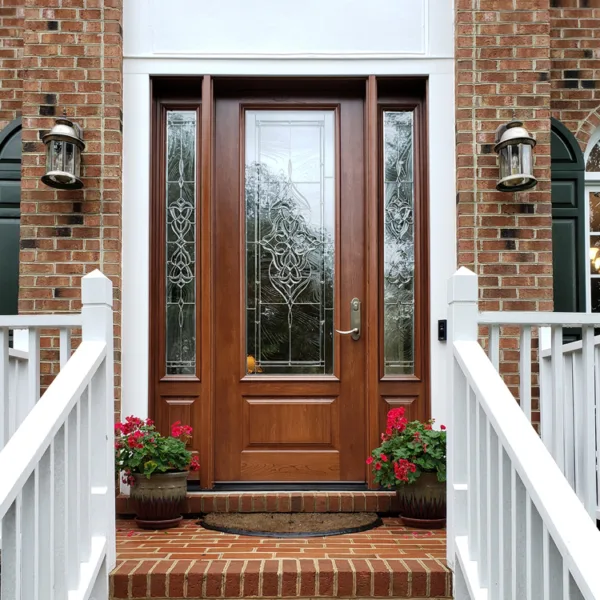
- You like the appearance of wood. Woodgrain fiberglass can recreate much of the texture and visual character homeowners associate with stained wood while using a fiberglass exterior surface.
- You want plenty of design flexibility. Fiberglass entry systems can be configured with different panel designs, glass, sidelites, transoms, colors, stains, and hardware.
- Your entrance receives regular weather exposure. Fiberglass is often considered by homeowners who want an exterior material designed to handle changing temperatures, moisture, and sun without choosing traditional wood.
- You want different product levels to compare. Fiberglass is a material category, not a single type of door. Construction, finish quality, glass, customization, and overall entry-system design can vary significantly between product lines.
Fiberglass is not automatically the best choice for every entrance. Homeowners who specifically want genuine wood or prefer the characteristics of steel should compare those materials before making a decision.
+
Years Experience
What Separates One Fiberglass Entry Door From Another?
Door Construction & Reinforcement
The fiberglass skin is only one component of the door. Internal structure, perimeter reinforcement, stiles, rails, and the way the slab is constructed can influence rigidity, hardware attachment, and overall feel.
Core, Frame & Weather Sealing
Insulated cores, frames, thresholds, weatherstripping, and seals work together as part of the complete entry system. These components vary between manufacturers and product lines.
Finish & Woodgrain Detail
Smooth fiberglass, embossed woodgrain, paint colors, factory stains, and texture quality can differ considerably. If you want a wood-look door, seeing the actual grain and finish in person can be especially helpful.
Glass, Hardware & Customization
Decorative glass, privacy glass, sidelites, transoms, handlesets, locks, and other options can turn two doors built from the same basic material into completely different finished entrances.
Why Fiberglass Works Well for Many Entry Door Projects
Lower-Maintenance Ownership
Fiberglass gives homeowners a way to achieve a finished exterior appearance without the routine staining and refinishing commonly associated with traditional wood doors.
Wood-Look Design Options
Realistic woodgrain textures and stain-style finishes can create a warmer, more traditional appearance without requiring the door itself to be made from solid wood.
Broad Customization
Depending on the product line, fiberglass doors can be customized with different panel designs, glass, sidelites, transoms, finishes, grids, and hardware.
Versatility Across Home Styles
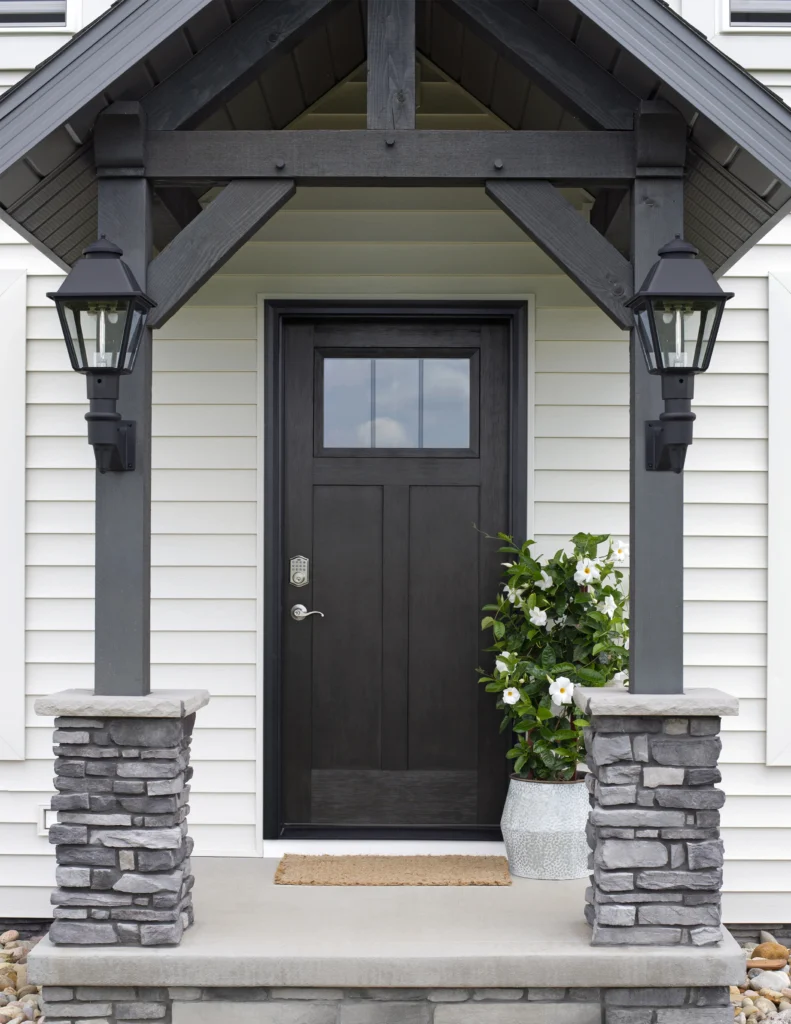
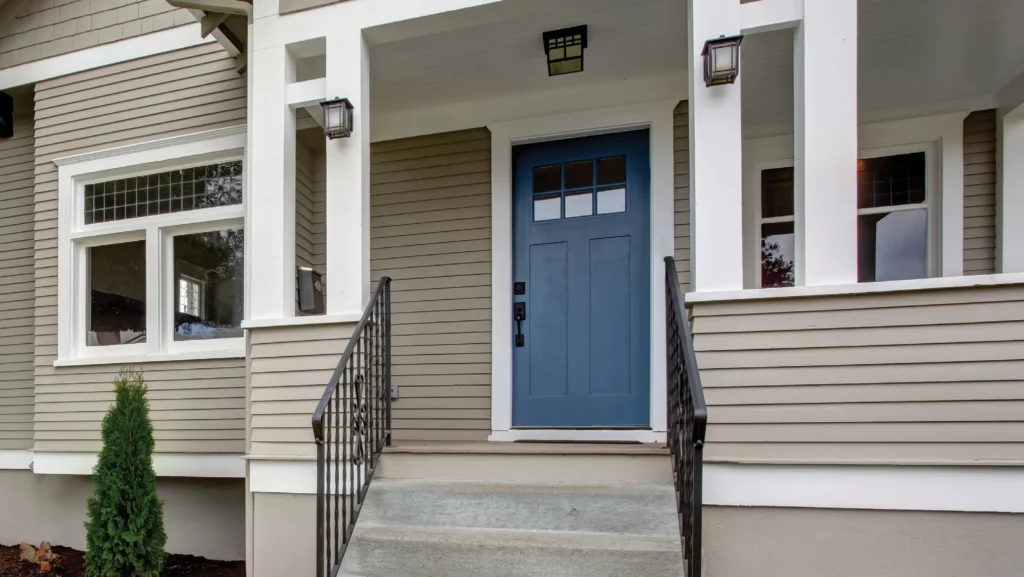
From traditional and Craftsman entrances to cleaner transitional designs, fiberglass can work with a broad range of architectural styles.

Fiberglass vs. Steel vs. Wood Entry Doors
Choosing a front door material is less about finding a universal “best” option and more about matching the material to your priorities.
Fiberglass is often a strong fit when homeowners want lower maintenance, broad design flexibility, and the option of smooth or wood-look finishes. It can work especially well when you like the appearance of stained wood but do not necessarily want a traditional wood exterior door.
Steel entry doors are another lower-maintenance option and may appeal to homeowners who prioritize a solid feel, strength, and straightforward painted finishes.
Wood entry doors provide genuine wood grain, natural variation, and stainability that fiberglass is designed to imitate rather than reproduce exactly. They may be the better fit when authentic wood is itself an important part of the design.
The right choice depends on appearance, maintenance expectations, exposure, available products, and the way the entrance is intended to complement the home.
Smooth Fiberglass vs. Wood-Look Fiberglass Doors
Fiberglass does not have to look like one particular type of door. One of its biggest advantages is the ability to create very different finished appearances from the same general material category.
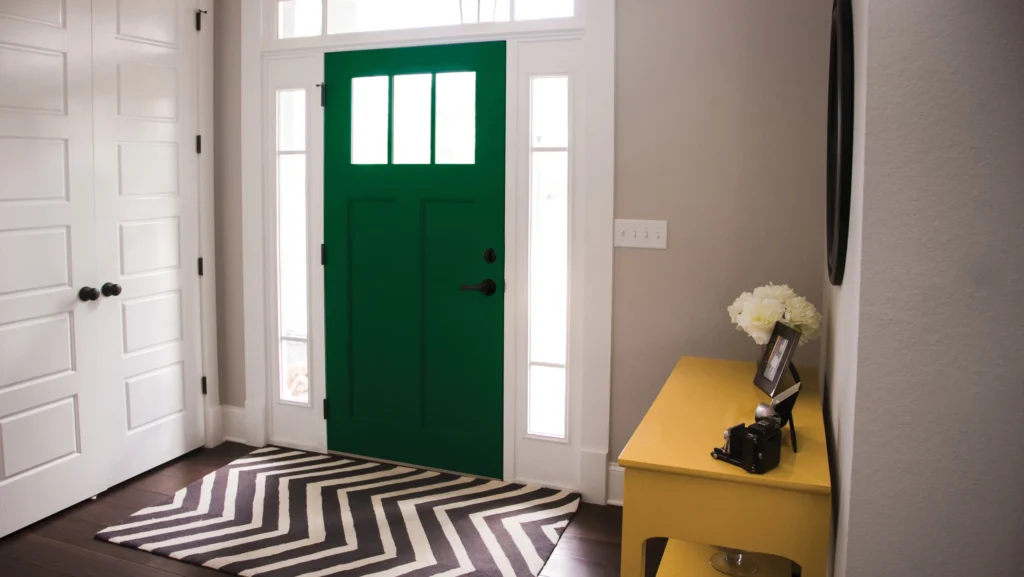
Smooth fiberglass is typically selected when homeowners want a painted finish and a cleaner, simpler surface. It can work well with traditional homes, but it is particularly useful for transitional or more contemporary entrances where a prominent woodgrain texture is not necessary.
Wood-look fiberglass uses molded grain patterns and stain-style finishes to recreate the appearance of species such as oak, cherry, mahogany, fir, or other woods depending on the product line. The depth and realism of the grain can vary, which is one reason it is useful to compare actual door samples rather than relying entirely on website photos.
Neither finish is inherently better. The decision comes down to whether you want the entrance to read as painted and clean or warm, textured, and wood-inspired.
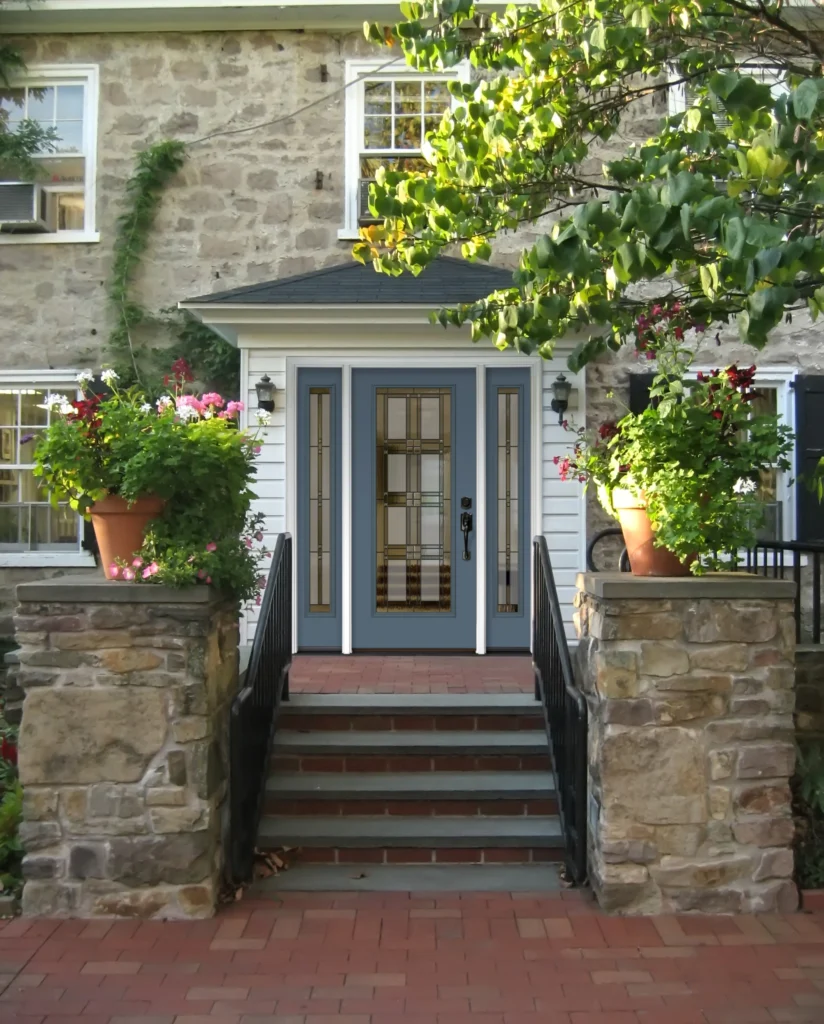
Design the Entire Entry Around the Fiberglass Door
A fiberglass front door is often only the starting point of the finished entrance. The proportions of the door, surrounding glass, finish, and hardware all contribute to how the entry looks from both inside and outside the home.
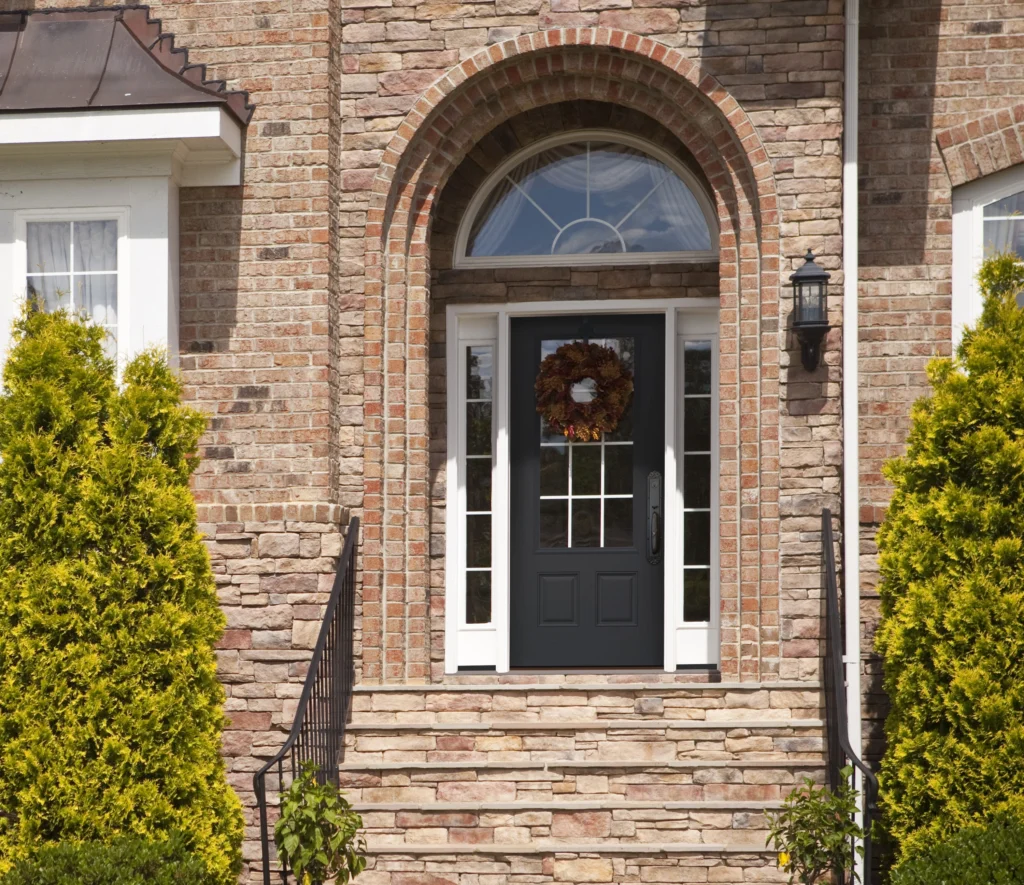
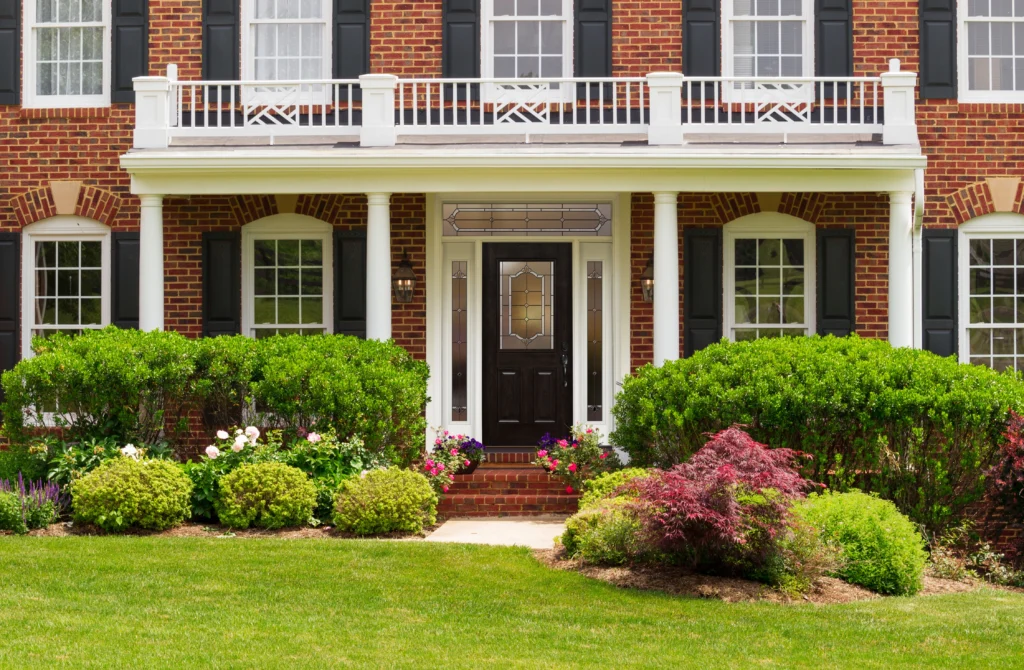
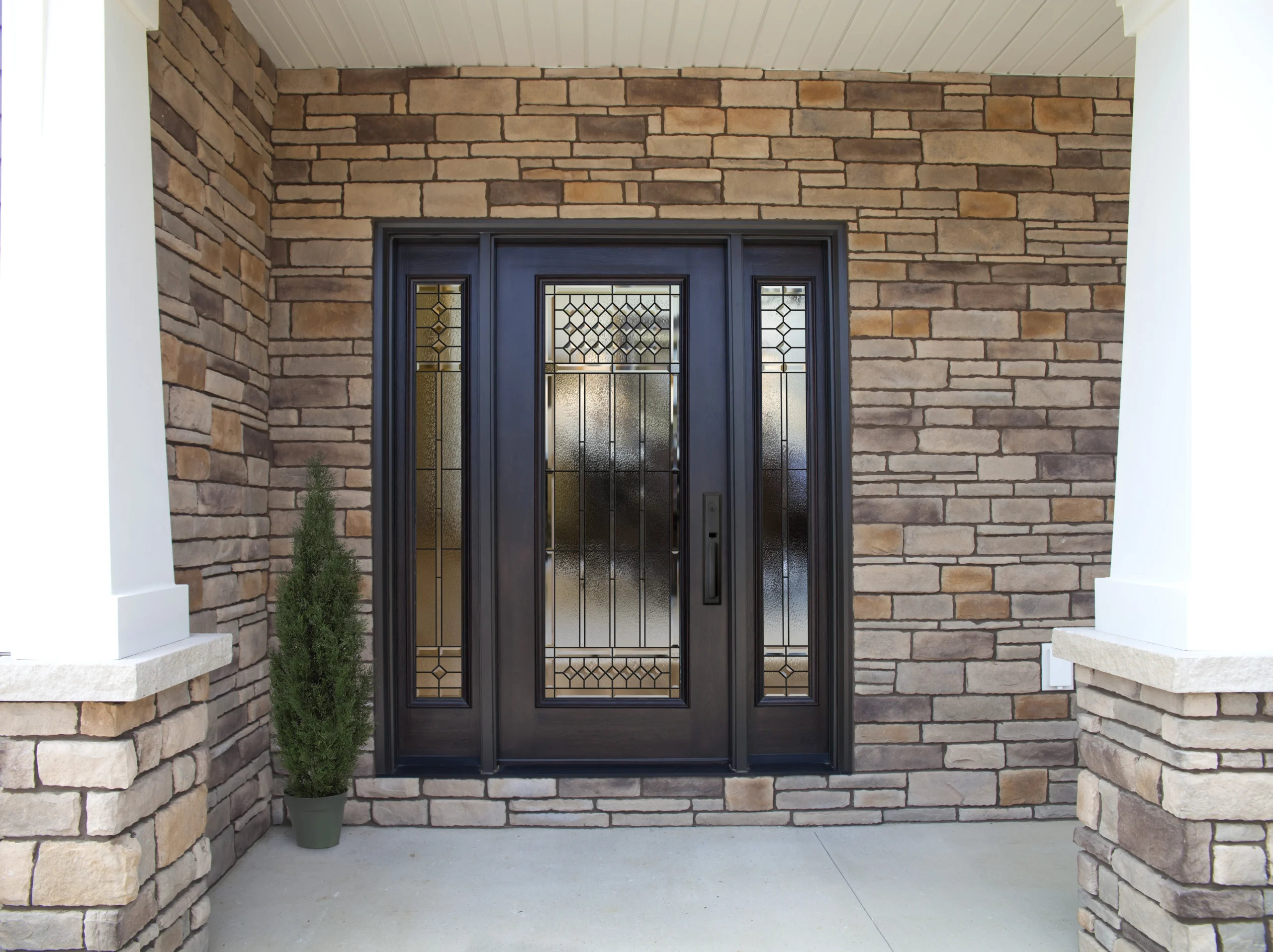
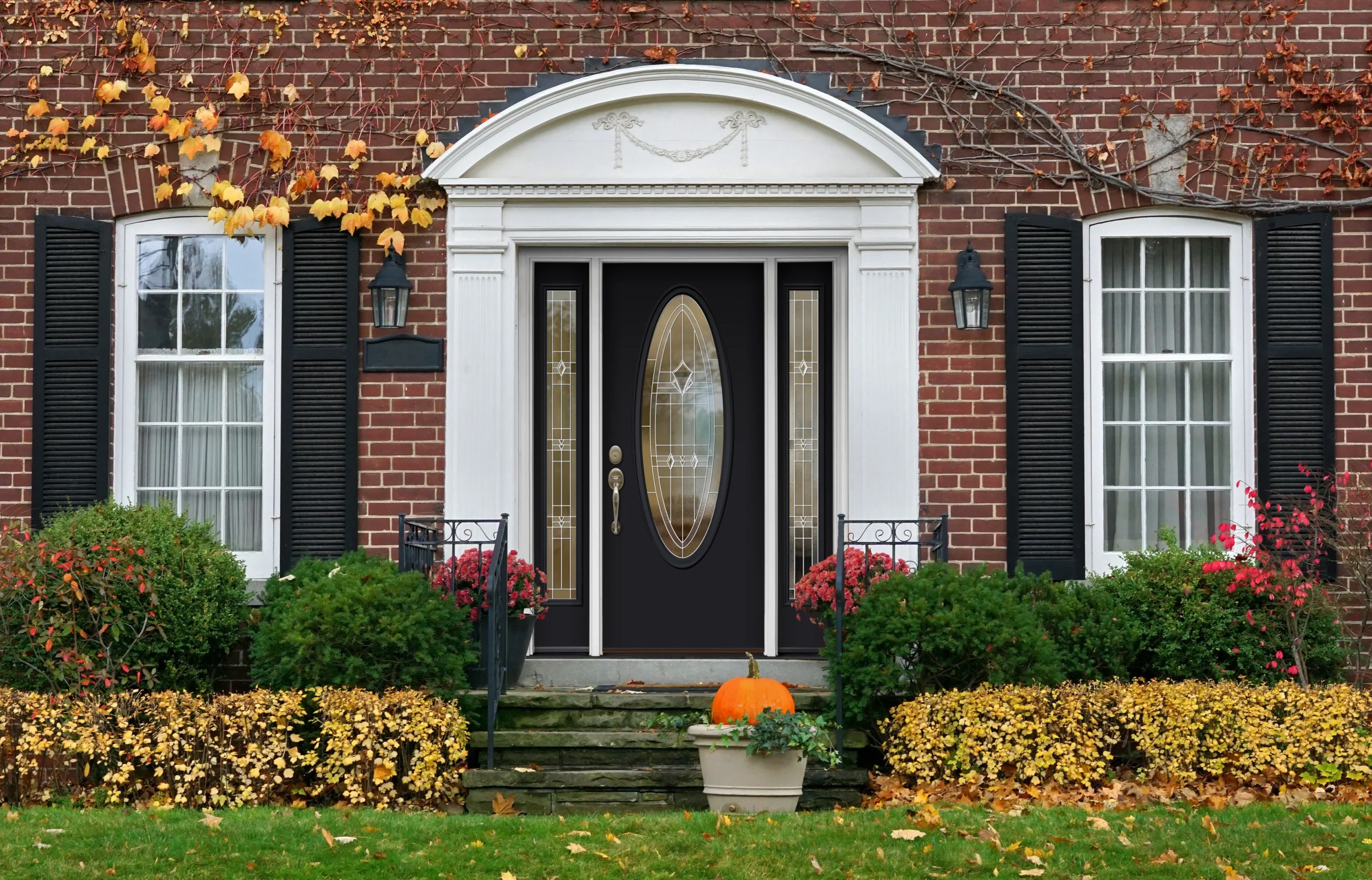
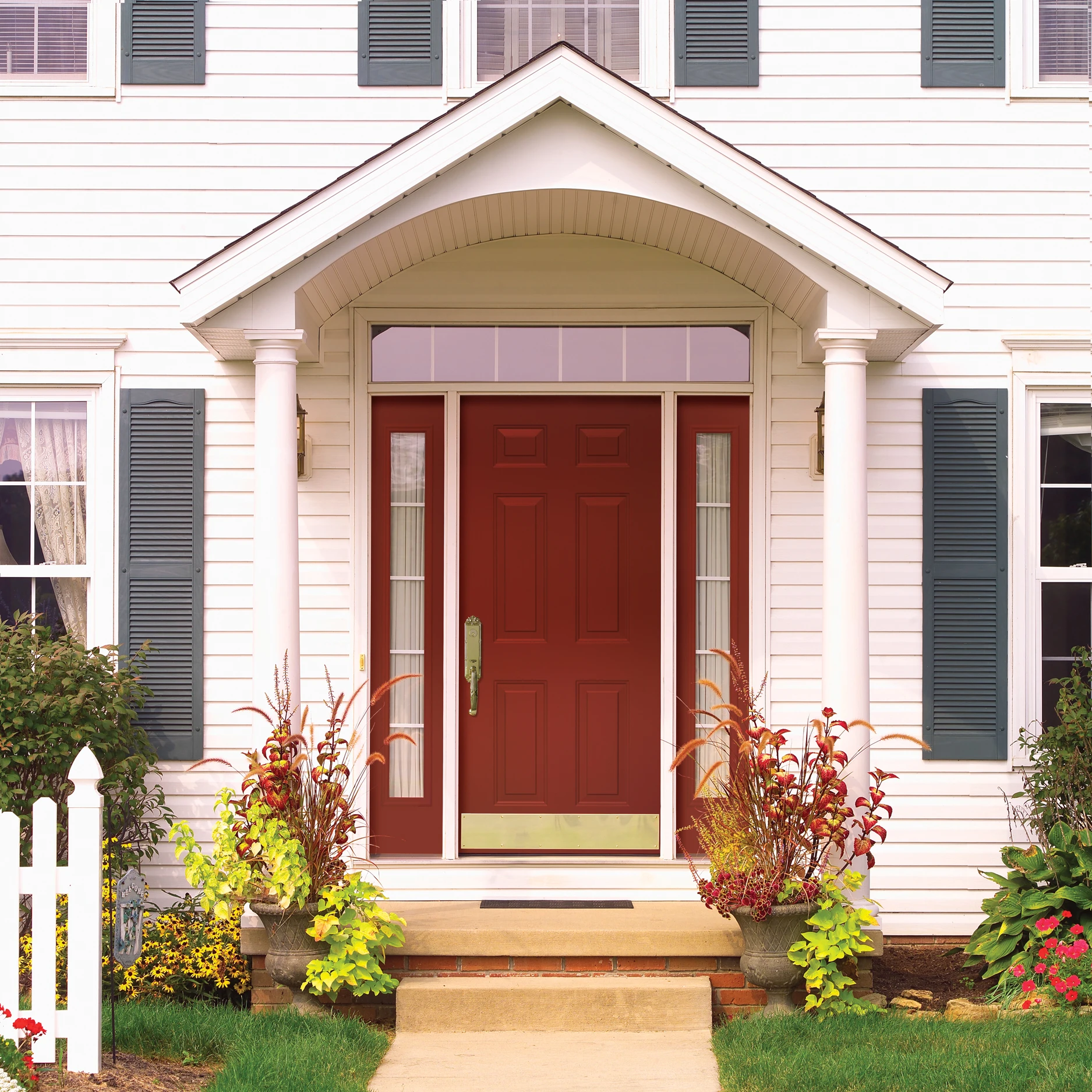
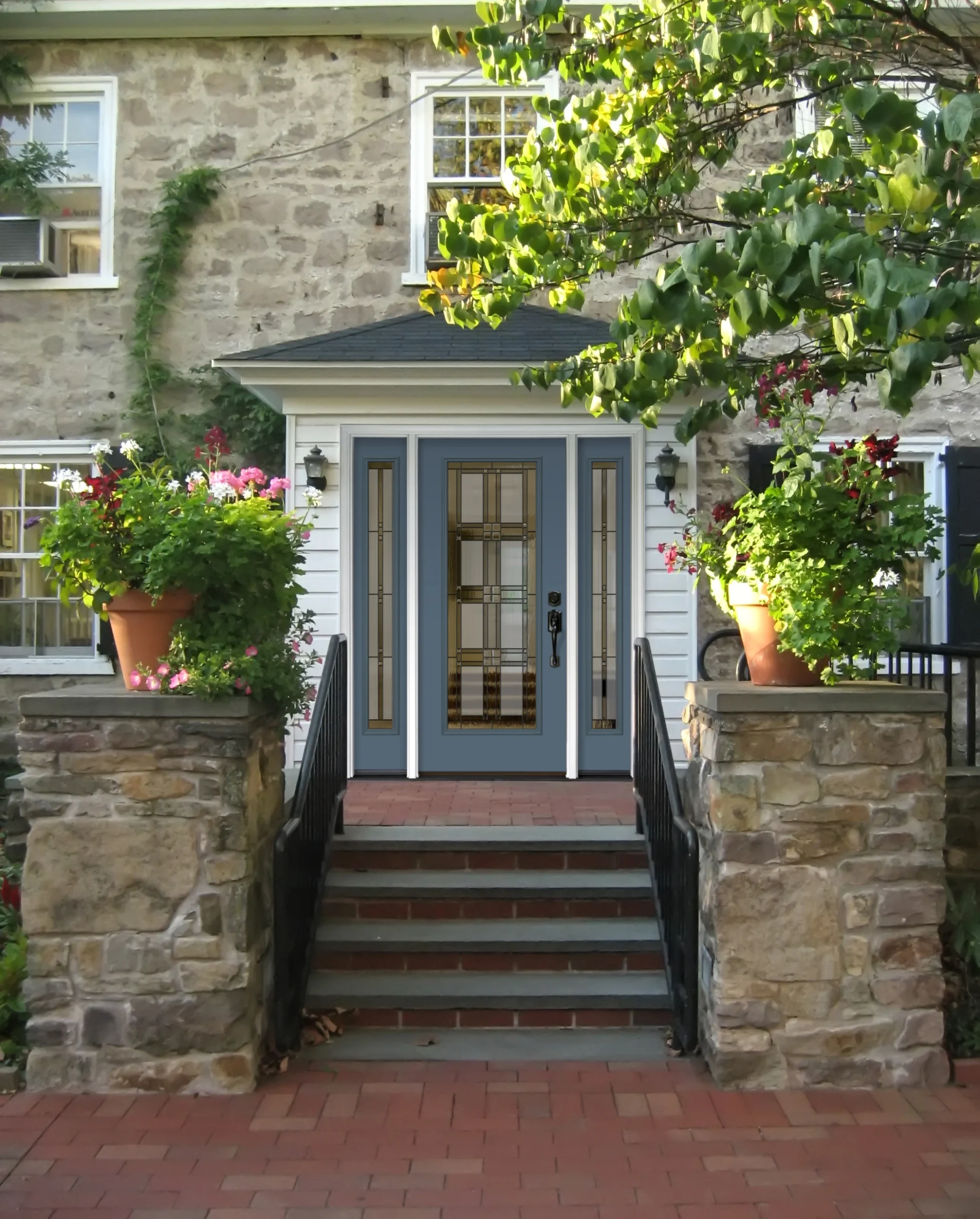
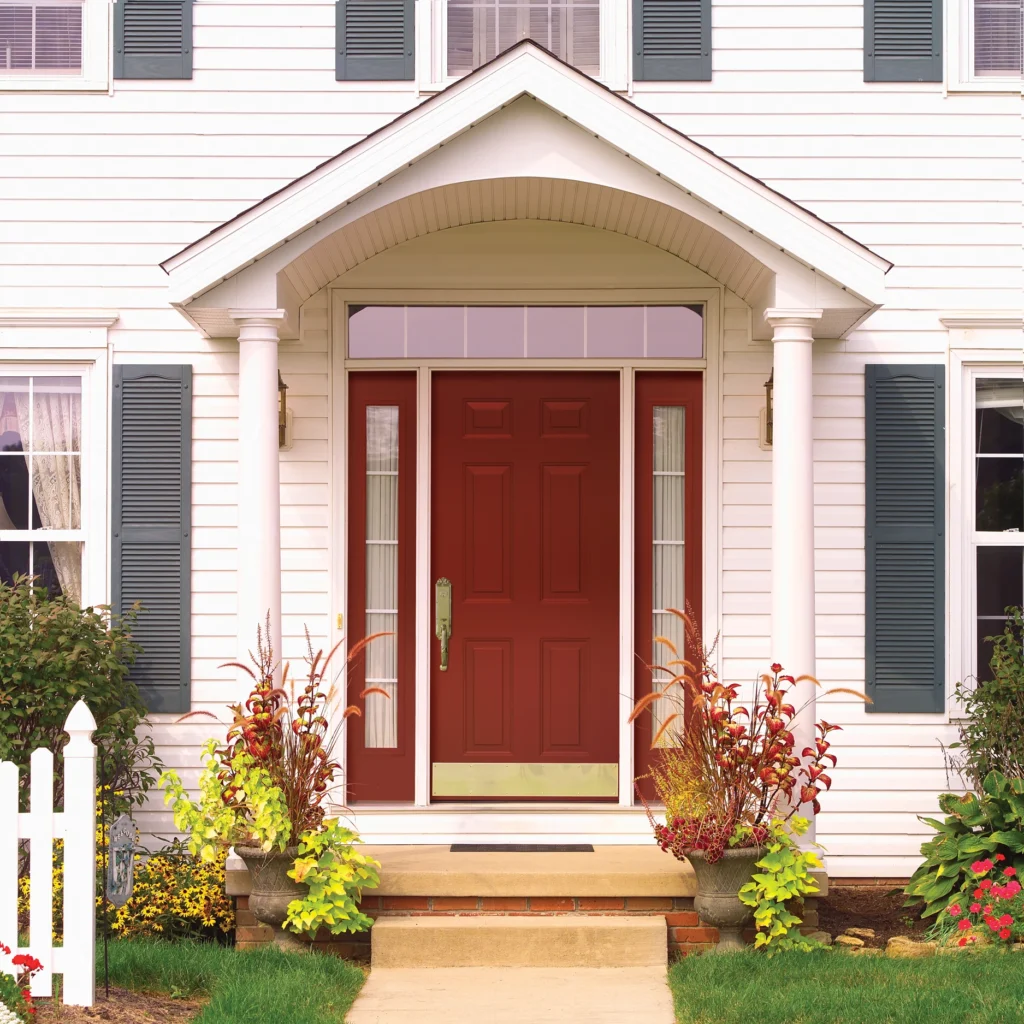
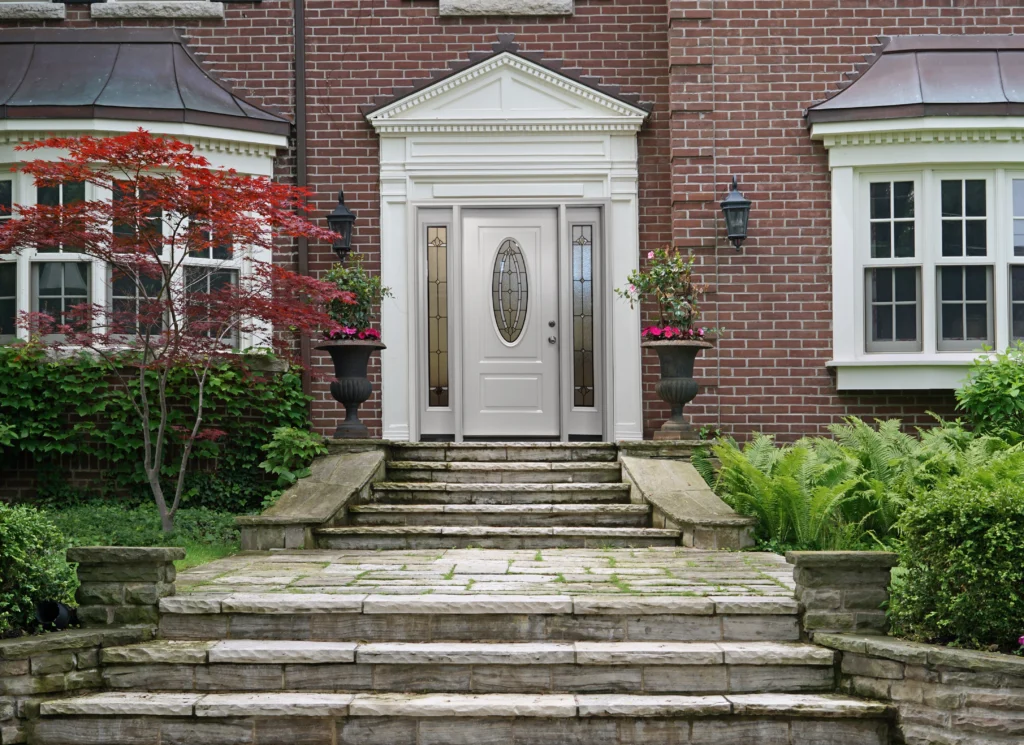
A single fiberglass door can create a clean, straightforward entrance, while double-door configurations can give a larger opening more visual presence. Sidelites can bring natural light alongside the door, and transoms can add glass above it to increase height and architectural interest.
Glass can range from minimal accent panels to larger decorative or privacy designs. Homeowners can also coordinate panel style, grid patterns, paint or stain finishes, interior and exterior colors, handlesets, locks, and other hardware.
The goal is not simply to pick a fiberglass slab. It is to create a complete entry system where the door, glass, finish, hardware, and surrounding architecture work together.
Compare ProVia Fiberglass Entry Door Options
Kelly Window & Door offers ProVia fiberglass entry doors in multiple product families, giving homeowners different combinations of wood-look detail, smooth finishes, glass, customization, and design flexibility. Rather than choosing based on the product name alone, compare how each line fits the appearance and priorities of your entrance.
EMBARQ® Fiberglass Doors
The door, reinvented for ultimate energy efficiency
- The most energy-efficient entry doors in the U.S.
- 43% thicker than standard doors, providing enhanced insulation and comfort.
- Choose from stunning Cherry, Mahogany, Oak, or Knotty Alder woodgrain finishes.
- Backed by a 15-year finish warranty for long-lasting beauty.
SIGNET® Fiberglass Doors
- Offers the widest selection of door styles and sidelite options.
- Engineered for structural superiority, surpassing traditional fiberglass doors.
- Available in smooth finishes or rich woodgrain options like Cherry, Mahogany, Oak, Knotty Alder, and Fir.
- Includes a 15-year finish warranty for peace of mind.
HERITAGE™ Fiberglass Doors
- Customizable heights in 1/8″ increments for a perfect fit.
- Available in Oak woodgrain or smooth fiberglass finishes, with a variety of stain and paint options.
- Protected by a 10-year finish warranty, ensuring lasting performance and style.
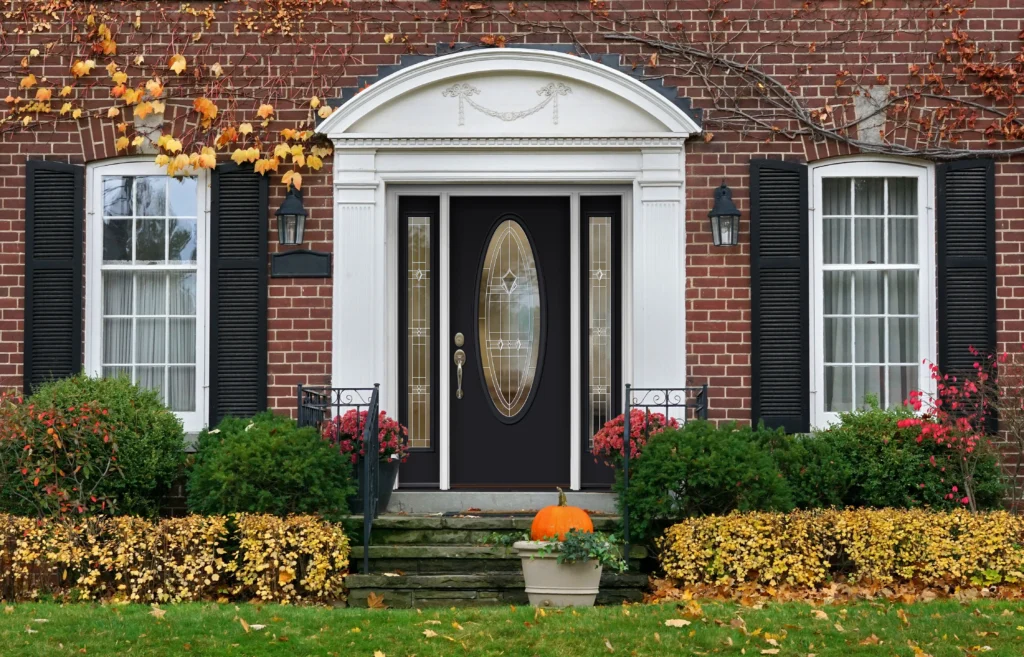
Choose the Right Glass for Your Fiberglass Entry Door
Glass can completely change the way a front entrance feels. The right amount depends on how much natural light you want, how much privacy the entrance needs, and the architectural style of the home.
Solid or low-glass doors provide more privacy and make the panel design itself a stronger visual feature.
Partial-glass designs can introduce natural light without turning the entire upper portion of the door into glass.
Larger glass panels can brighten an entryway and create a more open appearance.
Privacy and textured glass can allow daylight into the home while limiting direct visibility through the door.
Decorative glass adds another design element through patterns, textures, caming, and other details.
Sidelites and transoms can bring in additional natural light without requiring the primary door slab to contain a large glass area.
The best glass configuration balances what you want to see from the outside, from the inside, and through the glass itself.
Fiberglass Door Performance Depends on More Than the Slab
Fiberglass is often associated with energy-efficient entry systems, but the material alone does not determine how the finished entrance performs.
The insulated core inside the door contributes to thermal performance, while glass can have a significant impact when the entry includes larger decorative panels, sidelites, or a transom. Weatherstripping helps manage air movement around the door, and the threshold plays an important role at the bottom of the opening.
The frame and alignment matter as well. Even a well-built door needs to sit correctly within the entry so the weather seals make appropriate contact and the hardware operates as intended.
Exposure should also be considered. An entrance beneath a deep covered porch experiences different sun and weather conditions than a door exposed directly to afternoon sunlight and rain.
For that reason, Kelly helps homeowners evaluate the complete door, frame, glass, threshold, and installation, rather than assuming every fiberglass door performs the same way.
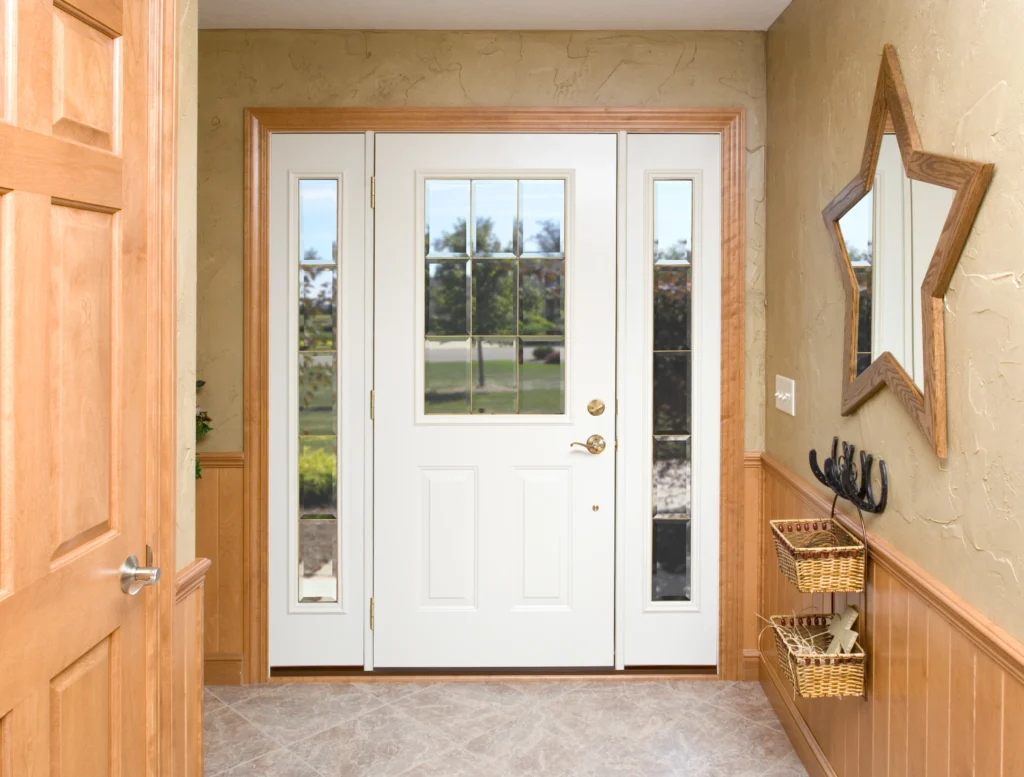
Two ProVia Fiberglass Doors Transform a Cary Home
When the Black family began planning updates to their 1992 Cary home, the original exterior doors were still in place. They wanted new doors that would improve the appearance of the home while giving them more control over the design of the finished entrances.
The project ultimately included two ProVia fiberglass doors, including a Signet-series front entry designed with sidelites, decorative glass, a cherry-style finish, satin nickel hardware, and additional locking features.
The front entrance is a good example of what makes fiberglass such a flexible material. Rather than simply choosing “a fiberglass door,” the homeowners were able to combine the material with a wood-inspired finish, decorative glass, surrounding sidelites, and coordinated hardware to create a much more personalized entry.
The family also appreciated being able to work through those decisions with Kelly rather than navigating the product choices on their own.
See the full Cary fiberglass door project.
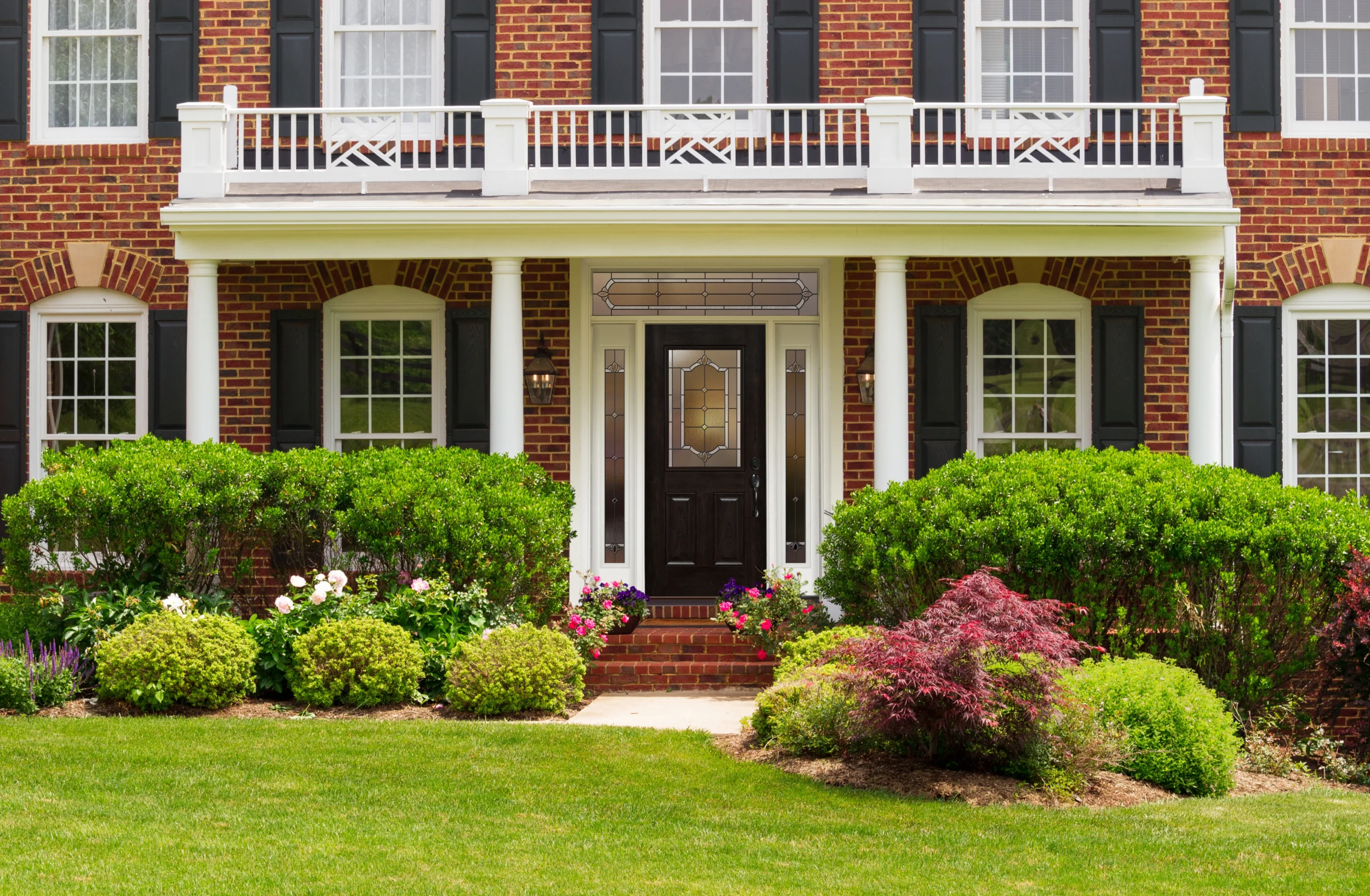
What Affects the Cost of a Fiberglass Entry Door?
Product Line
Different fiberglass door families offer different construction, finishes, customization options, and overall feature levels.
Door Size & Configuration
A single entry door, double-door system, or customized configuration requires different products and installation considerations.
Glass, Sidelites & Transoms
The size, style, and amount of glass can significantly change the complete entry system, particularly when sidelites or a transom are included.
Finish & Hardware
Factory paint, stain-style finishes, handlesets, locking options, hinges, and other selections all contribute to the finished project.
Installation Details That Matter With a Fiberglass Entry Door
Accurate Measurement
The entry system needs to be measured correctly so the ordered door, frame, sidelites, or other components fit the project as planned.
Level, Plumb & Alignment
Proper positioning affects how the door swings, meets the frame, engages the weatherstripping, and locks.
Threshold & Weather Sealing
The bottom and perimeter of the entry require careful attention to sealing and transition details because they separate conditioned interior space from exterior exposure.
Hardware & Final Operation
Handles, locks, hinges, glass components, and door operation should be checked as part of the finished installation before the project is considered complete.
What to Expect From Your Fiberglass Door Project

In-Home Consultation

Compare Door & Design Options

Final Measurements & Ordering

Professional Installation & Walkthrough
Compare Fiberglass Entry Doors at Our Cary Showroom
Fiberglass is one door material that can be particularly helpful to see in person. Woodgrain texture, smooth surfaces, stain colors, paint finishes, glass, and hardware can all look different on a full-size sample than they do on a computer screen.
At the Kelly Window & Door showroom in Cary, homeowners can compare entry-door options, see different finishes and design details, and get a better feel for how various products look and operate before finalizing a project.
The showroom is also a useful place to compare fiberglass with other entry-door materials if you are still deciding which direction makes the most sense for your home.

A Stress-Free Door Project With Local Warranty Support
Kelly Window & Door’s Stress-Free Guarantee is designed around making the project easier to navigate from the first consultation through product selection, ordering, installation, communication, and the final walkthrough.
Support does not simply end when the new door is installed. Warranty coverage can vary by manufacturer, product line, glass, finish, hardware, and other components, so Kelly remains a local point of contact if product-related questions come up later.
Learn more about Kelly Window & Door warranty support.